
Most people do not want a garden they have to fight. They want somewhere that looks good in October and still looks good in February, without losing every Saturday to the mower. That is achievable in Sydney, but it comes from design decisions rather than from buying tougher plants. The gardens that stay tidy with almost no input all share the same few features, and none of them are complicated.
Quick answer: Cut the lawn back or remove it, replace it with ground cover, gravel or paving, and mass-plant hardy natives such as Lomandra, Westringia, Grevillea and Dianella that suit your soil and aspect. Mulch or gravel every bed to 50 to 75 millimetres over weed matting, install drip irrigation on a timer, and add steel edging to hold the lines. Fewer species and fewer materials mean less work.
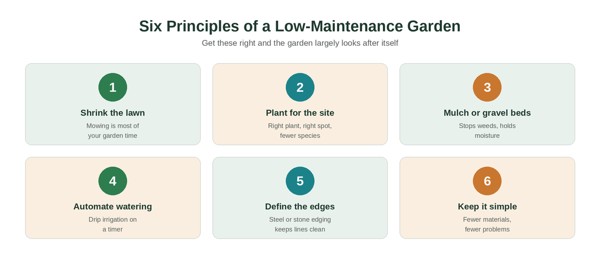
1. Shrink the lawn, or remove it
Lawn is where most garden time goes. Mowing, edging, feeding, watering and repairing patchy areas add up to more hours than everything else combined, and in Sydney summers it also accounts for most of the water. Reducing lawn is the single biggest change you can make.
That does not have to mean removing it entirely. A small, well-shaped patch of lawn that actually gets used, for kids or a dog, is worth keeping. What rarely earns its keep is turf running to every boundary because that is how the block was handed over.
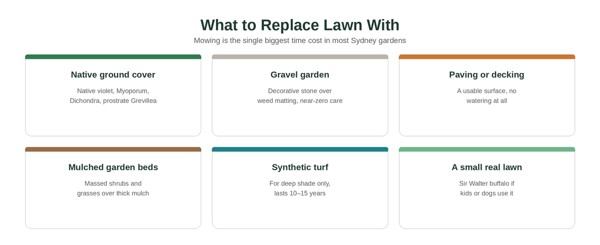
If you do keep lawn, choose a hard-wearing buffalo variety such as Sir Walter, which handles Sydney heat and part shade better than most alternatives and needs less coaxing to stay green.
2. Choose plants that suit the site, not the catalogue
Almost all ongoing plant maintenance comes from putting the wrong plant in the wrong place. A shade-lover in full western sun will need constant water and still look tired. Native species have adapted to local soils and rainfall over a very long time, which is why the NSW Government points to plants such as Grevillea, Westringia and Lomandra as reliable low-water choices.
Work out what you actually have first: full sun or shade, sandy coastal soil or the heavy clay found across much of Sydney, exposed or sheltered. Then pick from the plants that already thrive in those conditions.
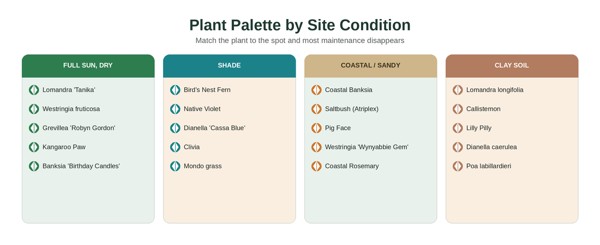
The rule that matters most:Mass-plant a small number of species rather than collecting many different ones. Repetition looks deliberate, makes replacements easy to match, and means you are learning to care for four or five plants instead of twenty.
3. Mulch and gravel beds properly
A mulched or gravelled bed is the difference between weeding monthly and weeding twice a year. The layers underneath matter more than the surface you can see.
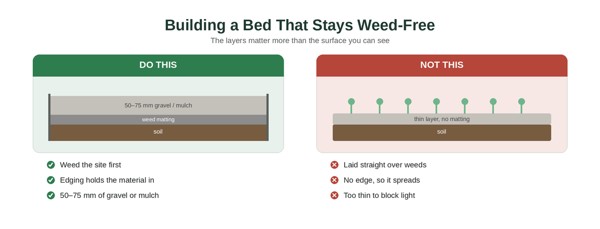
Clear the existing weeds first, because laying gravel over living weeds simply delays them. Lay commercial-grade weed matting under gravel areas, though in planted beds many landscapers skip fabric and rely on mulch depth instead, since fabric eventually gets covered by decomposed material where new seed germinates anyway. Spread 50 to 75 millimetres. Thinner than that lets light through and weeds come up; much thicker and you start to starve the soil.
Gravel suits paths, seating areas and informal zones because it does not break down. Mulch suits planted beds because it feeds the soil as it decomposes and holds moisture around roots. Most low-maintenance Sydney gardens use both.
4. Automate the watering
This is the step people skip, and it is the one that decides whether the garden survives. Hand watering works for about three weekends. After that it becomes the job you keep meaning to do, and the plants pay for it.
Drip irrigation on a simple tap timer delivers water straight to the roots with very little lost to evaporation, and it removes the decision entirely. Installation typically runs $1,500 to $5,000 on a Sydney front yard depending on size and complexity, and it generally pays back within a couple of seasons through plant survival and lower water use. Sydney Water also recommends watering in the cooler parts of the day to reduce evaporation, which a timer handles for you.
Worth knowing: Even drought-tolerant natives need regular water for their first 12 months while roots establish. Irrigation protects exactly that period, which is when most new gardens are lost.
5. Define the edges and keep the layout simple
Crisp edges do a surprising amount of work. A steel, aluminium or stone edge between gravel and planting, or between lawn and beds, stops materials migrating and grass creeping where it should not. It also means the garden looks maintained even when it has not been touched for a month.
The same logic applies to the layout. Complicated shapes with many small beds and several different materials create fiddly trimming and awkward corners. Simple, generous shapes with a limited palette are quicker to build, cheaper, and far easier to keep looking good.
What this actually saves you
It helps to see where the hours go. The figures below are indicative for a typical suburban Sydney garden, comparing a conventional lawn-and-beds layout with a low-maintenance design.
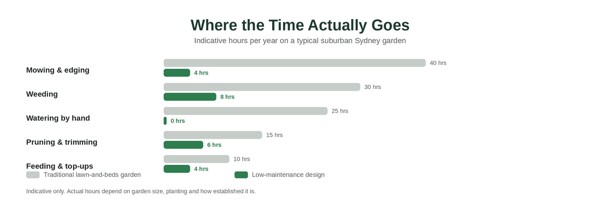
The pattern is consistent: mowing and hand watering are largely eliminated, weeding drops sharply once beds are mulched and planting closes over, and what remains is a feed once a year and a couple of controlled trims.
Low maintenance is not no maintenance
It is worth being straight about this, because a lot of articles are not. A low-maintenance garden still needs attention, just far less of it and at predictable intervals rather than constantly.
- Year one is the demanding one. New planting needs consistent water and weeding while it establishes and before it closes over.
- Mulch needs topping up. Organic mulch breaks down, so plan on refreshing beds every year or two.
- Plants still need trimming. Most hardy natives want one or two light trims a year to keep their shape and flower well.
- Irrigation needs checking. Drippers block and timers drift. A seasonal check takes minutes and prevents dead plants.
- Gravel needs an occasional top-up. It settles and migrates slightly, especially on paths.
Gardens for older homeowners
Low maintenance and accessible are related but not identical, and this is worth planning for deliberately if the garden needs to work for someone with limited mobility now or later.
- Raise the beds. Beds at around 600 to 900 millimetres remove most bending and kneeling, and let someone garden from a seat.
- Keep beds narrow. If you can reach the middle from one side, you never have to step into the bed.
- Widen and level the paths. A firm, slip-resistant surface with no steps makes the garden usable in all weather, and works for a walker or wheelchair.
- Automate everything possible. Irrigation on a timer removes hose dragging, which is one of the harder physical tasks in a garden.
- Add places to stop. Seating through the garden means it can be enjoyed and worked on in stages.
On a budget, or done properly
A low-maintenance garden can be built in stages or in one go. Both work, and the difference is mostly how much hard surface is involved.
| Approach | Indicative cost | What it covers |
|---|---|---|
| Staged / budget | $2,000 – $8,000 | Reduce lawn, mulch beds, hardy planting, small gravel area, basic timer irrigation |
| Mid-range | $15,000 – $30,000 | Paving or decking, edging, full drip irrigation, established planting, lighting |
| Full build | $30,000 – $45,000+ | Level changes, drainage, larger paved areas, mature planting, complete irrigation |
Indicative only. Cost depends on site access, levels, drainage and how much hard landscaping is involved.
Common mistakes
- Gravel straight over weeds. They come through within a season. Clear the site first.
- Too many species. A collection of individual plants is a maintenance list. Mass planting is a garden.
- No irrigation. The most common reason a new low-maintenance garden fails in its first summer.
- Ignoring soil and aspect. A plant fighting its position will always need help.
- Artificial turf in full sun. It gets uncomfortably hot in Sydney and has a disposal cost at end of life.
- Skipping edging. Without it, gravel spreads, mulch washes out and grass invades the beds.
How CANDO VIEW can help
A low-maintenance garden is mostly won at the design stage: getting drainage, levels, plant selection and irrigation right before anything is planted. Can Do View designs and builds outdoor spaces across Ryde, Eastwood, Carlingford, Epping, North Epping and greater Sydney, working from your actual soil, aspect and how much time you want to spend out there. If you would like a garden that looks after itself, we can put together a plan and a realistic scope. See our landscaping service or get in touch.
Frequently asked questions
What is the lowest maintenance garden design?
A structured native garden with gravel or mulched beds, minimal lawn and automatic drip irrigation takes the least ongoing work. That combination removes mowing entirely, cuts weeding to occasional spot checks, and reduces the routine to about one feed a year and two light trims. The key is choosing hardy species suited to your soil and aspect, then massing a small number of them rather than collecting many different plants.
What are the best low-maintenance plants for a Sydney garden?
For full sun and dry positions, Lomandra ‘Tanika’, Westringia fruticosa, Grevillea ‘Robyn Gordon’, Kangaroo Paw and dwarf Banksias such as ‘Birthday Candles’ all perform well. In shade, try Bird’s Nest Fern, Native Violet, Dianella ‘Cassa Blue’ and Mondo grass. Coastal and sandy sites suit Coastal Banksia, Saltbush, Pig Face and Westringia ‘Wynyabbie Gem’. On clay, Lomandra longifolia, Callistemon, Lilly Pilly and Dianella caerulea are reliable.
How do I create a low-maintenance garden with no grass?
Replace turf with a mix of surfaces and planting rather than one material across the whole yard. Use paving or decking where you walk and sit, gravel over commercial-grade weed matting for paths and informal areas, and mulched beds massed with hardy shrubs and strappy grasses elsewhere. Native ground covers such as Native Violet, Myoporum or Dichondra give a green, walkable look without mowing. Steel or aluminium edging keeps each zone separate and tidy.
How much does a low-maintenance garden cost in Sydney?
It depends on how much hard surface is involved. A staged, budget approach using mulch, hardy plants and a small gravel area can start in the low thousands. A professionally built low-maintenance garden with paving or decking, edging, irrigation and established planting more commonly runs from around $15,000 to $45,000. Drip irrigation alone typically costs $1,500 to $5,000 to install on a Sydney front yard, and usually pays for itself in plant survival and water use within a couple of seasons.
Is gravel or mulch better for a low-maintenance garden?
Both work, and they suit different jobs. Gravel is best for paths, seating areas and informal zones because it does not break down and needs almost no attention beyond an occasional top-up. Mulch is better in planted beds because it feeds the soil as it decomposes and holds moisture around roots. Many Sydney gardens use both: gravel for circulation and hard-wearing areas, mulch through the planting. Either way, weed the site first and lay 50 to 75 millimetres.
Does a low-maintenance garden still need watering?
Yes, particularly in the first year. Even drought-tolerant natives need regular water while they establish their root systems, usually for the first 12 months. After that, most need very little beyond dry spells. This is exactly why automatic drip irrigation matters so much: it protects the establishment period without you having to remember, and it delivers water to the roots rather than losing it to evaporation.
What is the best low-maintenance garden for older homeowners?
Prioritise access and reach as well as low upkeep. Raised garden beds at around 600 to 900 millimetres remove most bending, wide level paths with a slip-resistant surface make the garden safe to move through, and automatic irrigation removes hose dragging entirely. Choose plants that hold their shape without regular pruning, keep beds narrow enough to reach across, and add seating so the garden can be enjoyed in stages rather than all at once.
Is artificial turf a good low-maintenance option?
It suits specific situations rather than being a general answer. Synthetic turf works well in deeply shaded courtyards where real grass will not establish, or where there is no way to irrigate. The trade-offs are that it gets very hot in Sydney summers, typically lasts 10 to 15 years, and costs money to remove and dispose of at the end of its life. On a normal sunny block, a small area of hardy buffalo turf or a planted ground cover usually ages better.